Projects

Simulation work for airport baggage and cargo systems

A selection of professional simulation projects across the Middle East, the responsibilities that come with leading them, and the academic research the work is built on. All descriptions are intentionally high-level and contain no confidential project information.

01

Selected Professional Projects

Airport baggage and cargo handling simulation projects, from model development as a Simulation Engineer to leading the simulation workstream as Simulation Lead Middle East.

01

Baggage Handling System Simulation

Dubai International Airport (DXB)

Dubai, UAE

Role
Simulation Lead - Middle East
Company
Siemens Logistics / Vanderlande Logistics

Working on simulation studies covering baggage handling operations across Terminals 1, 2 and 3. Supporting system modifications, capacity assessments, operational analysis and optimization through discrete-event simulation.

Focus areas

  • Operational scenario development
  • Capacity and performance analysis
  • System validation
  • Evaluation of design and operational alternatives
  • Simulation-based decision support
  • Baggage Handling
  • Discrete-Event Simulation
  • Capacity Analysis
  • Airport Logistics
02

Baggage Handling System Simulation

King Khalid International Airport (RUH) — Terminals 1 & 2

Riyadh, Saudi Arabia

Role
Simulation Engineer
Company
Siemens Logistics

Developed and analyzed discrete-event simulation models supporting the renovation and performance validation of baggage handling systems at Terminals 1 and 2.

Focus areas

  • Simulation model development
  • Operational scenario testing
  • Capacity and performance analysis
  • Evaluation of system concepts
  • Identification of optimization opportunities
  • Baggage Handling
  • Discrete-Event Simulation
  • System Optimization
03

Cargo Handling System Simulation

Major Air Cargo Hub — Riyadh

Riyadh, Saudi Arabia

Role
Simulation Engineer
Company
Siemens Logistics / Vanderlande Logistics

Worked on simulation studies for the design and performance validation of a large-scale automated air cargo handling system.

Focus areas

  • Simulation model development
  • Operational scenario testing
  • Capacity and performance analysis
  • Evaluation of design and operational alternatives
  • Simulation-based decision support
  • Coordination with multidisciplinary engineering teams
  • Cargo Handling
  • Discrete-Event Simulation
  • Airport Logistics
  • System Optimization
04

Cargo Handling System Simulation

Major Air Cargo Hub — Jeddah

Jeddah, Saudi Arabia

Role
Simulation Engineer
Company
Siemens Logistics / Vanderlande Logistics

Developed and analyzed simulation models supporting the design and validation of an automated air cargo handling system.

Focus areas

  • Simulation model development
  • Operational scenario testing
  • Capacity and performance analysis
  • Evaluation of system concepts
  • Identification of optimization opportunities
  • Technical coordination with engineering teams
  • Cargo Handling
  • Capacity Analysis
  • Airport Logistics

Career progression

Simulation EngineerSimulation Lead — Middle East
  • Simulation
  • Engineering
  • Consulting
  • Customer Interaction
  • Technical Leadership
  • Proposal Support

Further professional work

01

Responsible Person

Creation of Custom Power BI Visuals for 3D Visualisations of Conveyor Systems

  • Siemens Logistics GmbH — Simulation Team (SL AIR TI EN MS SIM)

I was responsible for the creation and implementation of a custom Power BI visual tailored to 3D visualizations of conveyor systems, bringing advanced visualization capabilities into Power BI dashboards used across the company.

Scope

  • Development from scratch using custom JavaScript code
  • Data integration: linking additional data tables for filtering and automatic visualization inside the 3D layout
  • Interface creation for compatibility with different company-wide tools
  • Dashboard integration: ready-to-use visuals for any Power BI dashboard
Siemens
02

Responsible Person

Procurement and Implementation of Two State-of-the-Art Drying Booths

  • Rolls-Royce Motor Cars Limited — Interior Manufacturing, Series Planning

A year-long project spanning initial requirements analysis, the entire procurement process, implementation and final evaluation of two new state-of-the-art drying booths, meeting quality, time and cost targets with a concurrent budget of approx. £140k. It impacted all upstream and downstream processes through a change in core drying technology and a major layout redesign.

Scope

  • VSD of elaborated scenarios and creation of business cases
  • Benchmark visits and management status presentations
  • Planning and steering the implementation of two bespoke drying booths
  • Machine specifications, joint technical solution development and procurement
  • Updating the layout of all affected processes and managing on-site works
Rolls-Royce Motor Cars
02

Beyond Individual Projects

My role goes beyond single simulation studies. It combines technical leadership, customer consulting, proposal support and team coordination across simulation projects in the Middle East.

01

Simulation & Technical Leadership

Leading and coordinating simulation activities for baggage and cargo handling projects across the Middle East.

  • Manage overall planning including scheduling, budget allocation, and resource management for internal staff and external resources
  • Coordinate and manage all Simulation and HLC-Emulation tasks throughout the entire project lifecycle, from tender to operation
  • Ensure all simulation requirements — functions, deadlines, budget, quality — are consistently met
  • Define simulation scopes and methodologies
  • Review models, assumptions and results
  • Support engineers with technical guidance and ensure consistency across simulation studies
02

Customer Consulting

Working directly with customers and project stakeholders throughout different project phases.

  • Actively participate in solution finding and development by contributing technical expertise to create competitive customer solutions
  • Customer workshops and technical presentations
  • Explain simulation methodologies and results
  • Translate operational requirements into simulation scenarios
  • Provide simulation-based recommendations for design decisions
03

Proposal & Tender Support

Supporting business development and project acquisition activities.

  • Support sales and proposal teams during tender phase with comprehensive scope definitions for Simulation and HLC-Emulation work
  • Prepare effort estimations tailored to project requirements and deliver static calculations and simulation analyses as needed
  • Develop technical approaches and methodologies for proposals
  • Support proposal and tender preparation
  • Participate in customer clarification meetings
04

System Analysis & Optimization

Using simulation as a decision-support tool throughout feasibility, design and implementation phases.

  • Analyze and optimize system designs and control strategies
  • Capacity analysis
  • Comparison of design alternatives
  • Operational scenario testing
  • Control strategy evaluation
  • System optimization
05

Team & Project Coordination

The leadership side of the Simulation Lead role, across teams and disciplines.

  • Provide technical leadership to the assigned team of simulation engineers, managing their tasks and developing their skills
  • Coordinate simulation resources and assign technical work
  • Review models and analyses
  • Mentor simulation engineers
  • Coordinate with engineering, project management and other disciplines
  • Act as an interface between simulation specialists, project teams and customers
03

Academic Projects & Research

Theses and university research in optimization, routing and simulation — the foundation of my professional work.

01

Master's Thesis · Author

Development of an Optimization Method for the Automatic Layout Generation of Conveyor Systems

  • Technical University of Munich — Chair fml
  • Politechnic University of Valencia — Applied Mathematics, E.T.S.I.
  • Siemens Logistics GmbH — Simulation Team

The development of efficient baggage handling systems is crucial for a seamless travel experience. A critical component is the conveyor system, which transports baggage from check-in to its final destination. Designing it well means optimizing the layout and maximizing throughput capacity.

That task is challenging and time-consuming, as it requires extensive knowledge of the various components and constraints. This research develops an optimization method for the automatic layout generation of conveyor systems in baggage handling systems, using advanced algorithms to automate the design process and cut the time and resources needed for manual layout generation.

Technical University of MunichSiemensTecnomatix Plant SimulationGurobi OptimizationC#
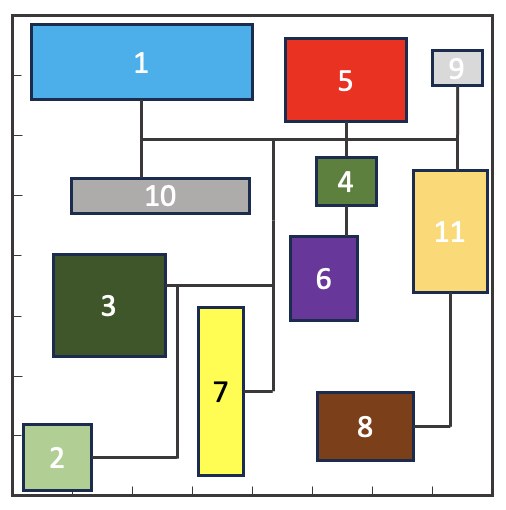
Automatically generated block layout of a baggage handling area
Automated block layout generation
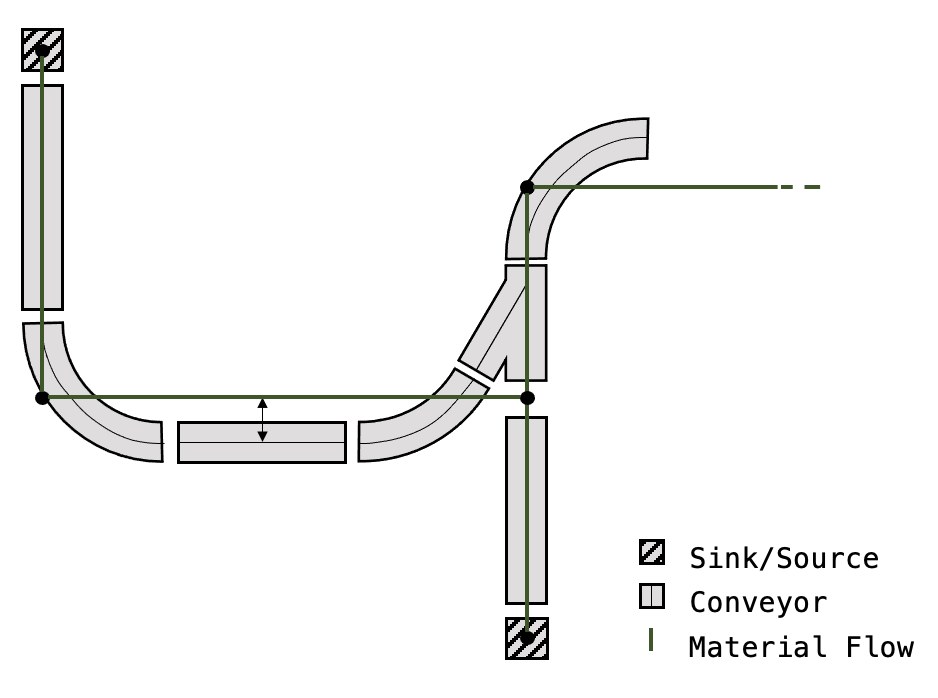
Schematic conveyor routing with sinks, sources and material flow
Conveyor routing and material flow
02

Semester Thesis · Author

Development and Implementation of a Routing Algorithm for Heterogeneous Inbound Transport Systems

  • Technical University of Munich — Chair fml

The aim of this work was the development of an algorithm that optimises order allocation and the routes taken in internal transport, respecting restrictions such as the relationships between different means of transport and transport units.

The algorithm was implemented and evaluated in an existing Plant Simulation model with SimTalk. The final solution combined the Hungarian method and the 2-opt heuristic, with the option to optimise travel times or distances, resulting in significant improvements in system performance.

Successfully submitted to I3M 2022 — the 19th International Multidisciplinary Modeling & Simulation Multiconference.

Technical University of MunichTecnomatix Plant Simulation
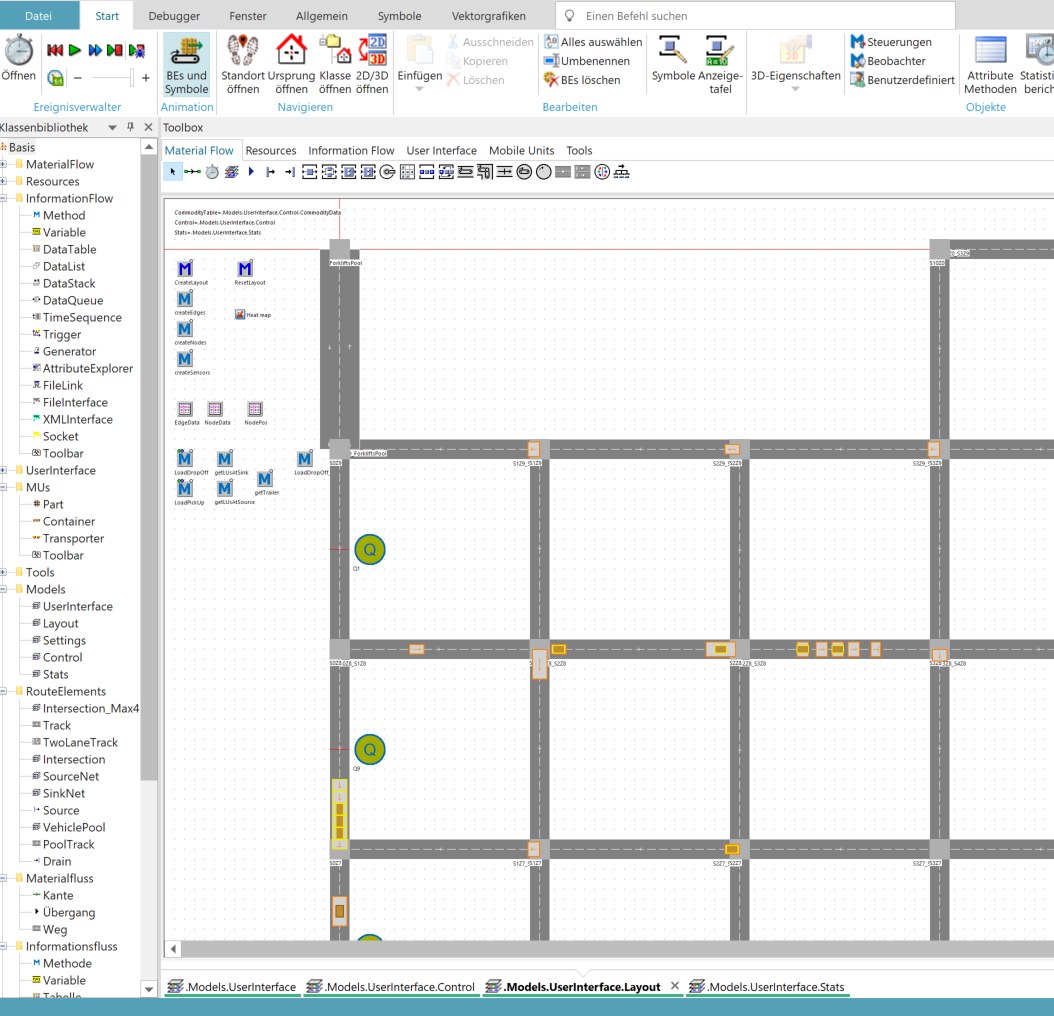
Plant Simulation model of an inbound transport system
Plant Simulation model with SimTalk implementation
03

Bachelor's Thesis · Author

Design, Implementation and Evaluation of a Software Tool for Partially Automated Optical Component Measurement

  • Technical University of Munich — Chair of Metal Forming and Casting (utg)

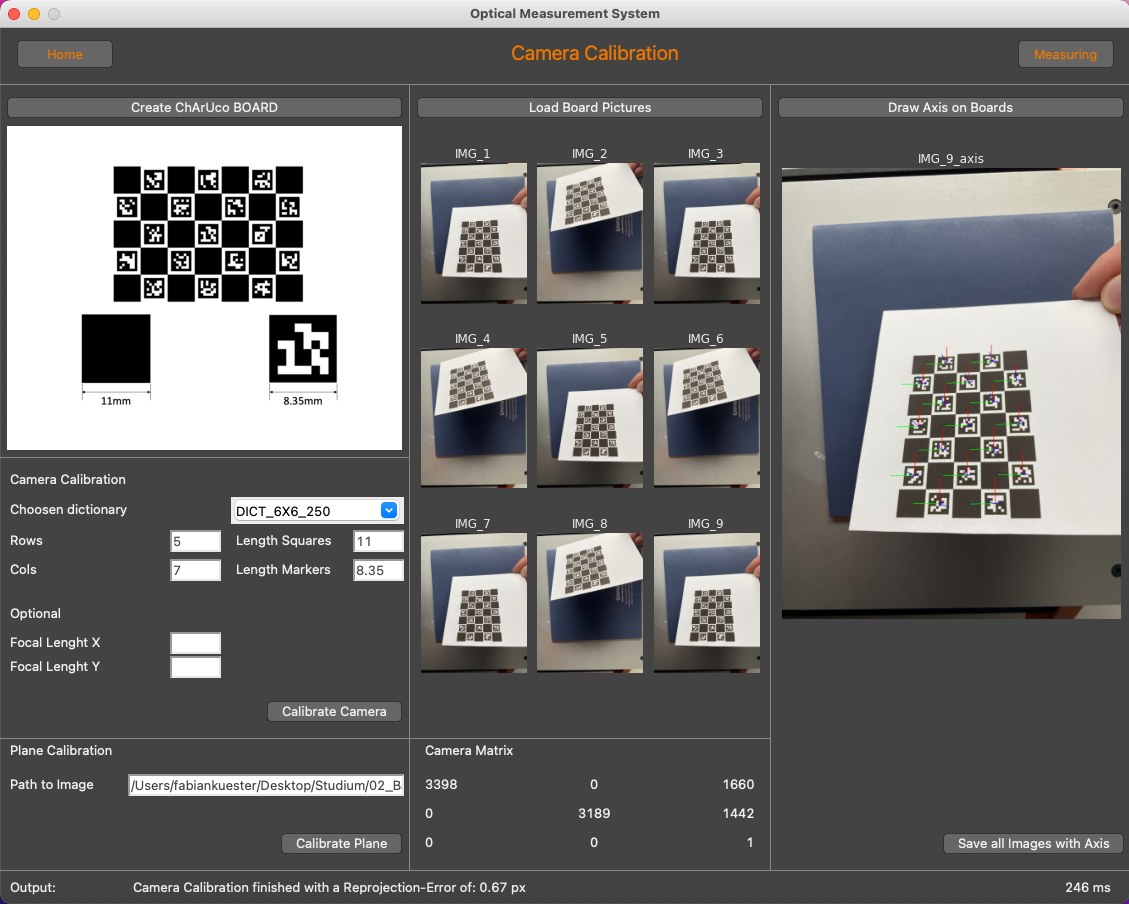
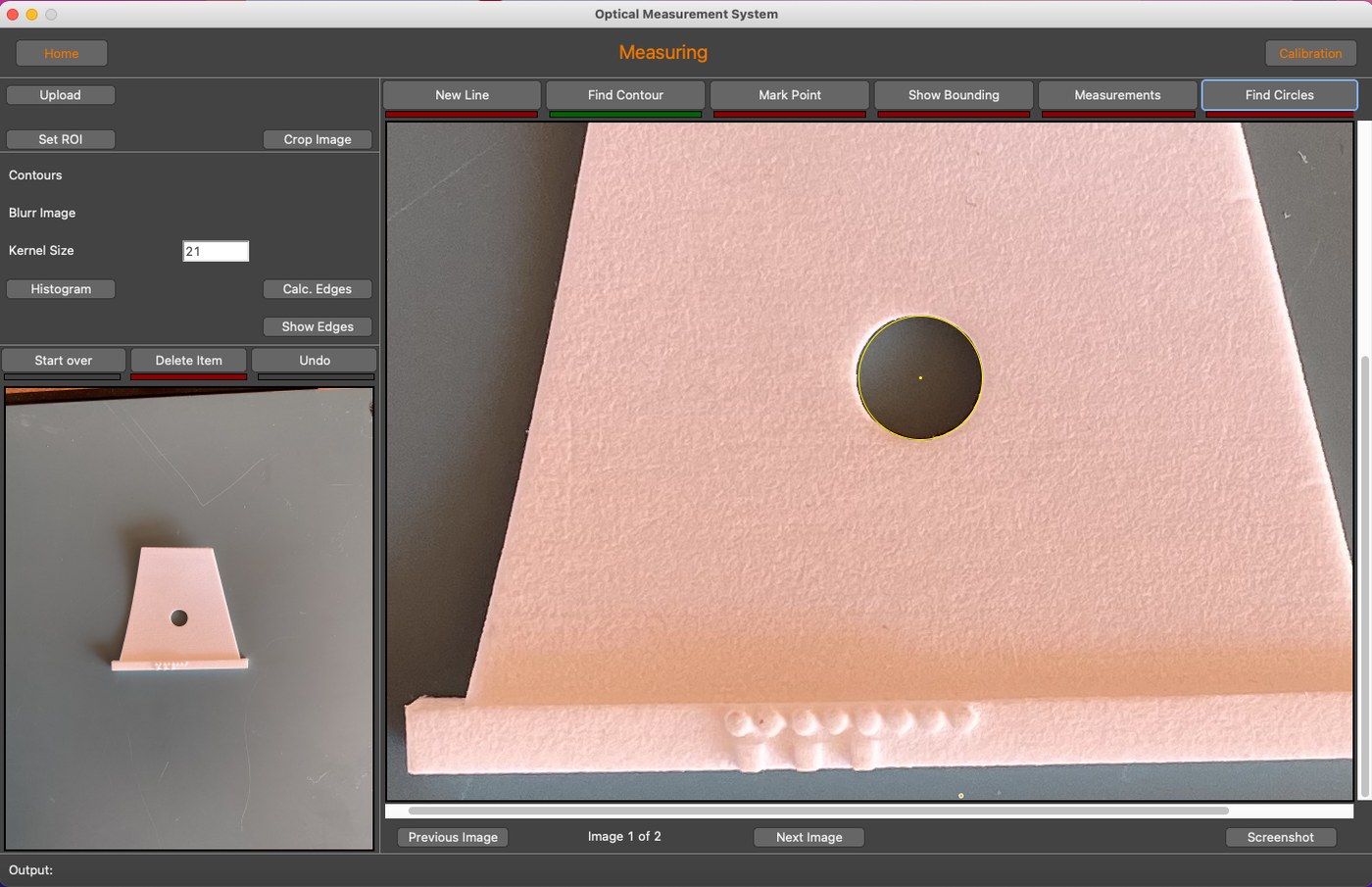
I developed a programme for manual and semi-automatic optical measurement of components using simple mobile phone images. It contained a custom interface with plane calibration via Charuco boards and measurements in three-dimensional space — either manually by drawing lines or through automatically generated borehole measurements. The implementation was done entirely in Python.

Technical University of MunichPython
Software interface for camera calibration with Charuco boards
Camera calibration via Charuco boards
Automatic borehole measurement inside the software tool
Automated borehole measurement